Hakko
FX-888D
Amazon offer not confirmed
Reviewed by Logan Johnson. Last updated June 1, 2026. Read the test method.
Author
Logan Johnson
Evidence
Published specs, catalog receipts, owner-reported failure patterns
Policy
No sponsored placementsAt a Glance
Best For
Overview
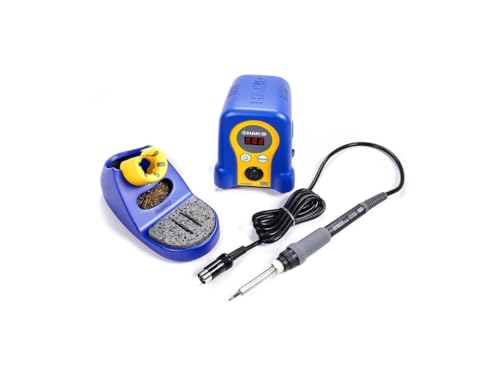
The Hakko FX-888D has been the default recommendation in hobbyist electronics circles for so long that calling it a benchmark feels like an understatement. If you ask ten experienced PCB assemblers what station they started on, seven will say the FX-888D or its older analog sibling the 936. That kind of consensus doesn't happen by accident.
What makes it the reference station isn't any single spec — it's the combination of ±2°C temperature stability, a tip ecosystem that's been expanding for 20+ years, and a build quality that makes the station feel like it will outlast your workbench. The digital display, programmable presets, sleep mode, and auto-shutoff aren't flashy features; they're sensible defaults for a tool you'll use weekly for the next decade.
At $109, the FX-888D costs roughly 2x a no-name soldering iron and about half what a professional JBC station runs. That middle position is exactly right. It's serious enough to do real work — fine-pitch SMD, through-hole PCB, component replacement on consumer electronics — without the intimidating price tag of pro-tier gear. If you're setting up a first bench or upgrading from a hardware-store iron, this is the station to buy.
Pros & Cons
Pros
- Industry-standard temperature stability — consistently within ±2°C under load
- Massive tip ecosystem: T18 series covers needle, chisel, bevel, and specialty shapes
- Compact, ergonomic iron handle with rubberized grip
- Digital display with programmable presets (5 stored temperatures)
- Sleep mode and auto-shutoff reduce tip oxidation
- Well-documented repair history — parts available for 10+ years
Cons
- No built-in hot-air channel — rework needs a separate tool
- 60W is enough for most PCB work but struggles with large thermal-mass joints
- Tip prices are higher than generic alternatives
- No USB connectivity or logging for temperature verification
Temperature Stability — Why ±2°C Is the Number That Matters
Temperature stability at the tip — not the station setpoint, but the actual tip temperature under thermal load — is the spec that separates real soldering stations from temperature-controlled irons. The FX-888D holds ±2°C under continuous load. Put that in context: a typical hardware-store iron drifts 20–40°C when you drag it across a ground plane that's absorbing heat. An average-quality 'digital station' from an unknown brand holds ±8–12°C under similar conditions.
The ±2°C spec isn't marketing — it's measurable with a tip thermometer. In practice it means you can set 315°C for leaded solder (63/37) and the tip will hold that temperature through a 10-second drag across a row of 0402 resistors without climbing to a temperature that risks component damage.
This matters most for sensitive components: MOSFET gates, small ceramic capacitors, flex connector pads. With a drifting iron you're constantly racing between too cold (poor joints) and too hot (dead component). With the FX-888D, you pick a temperature, and you get that temperature. The cognitive load of soldering drops noticeably.
The caveat: ±2°C is the published spec under controlled conditions. Real-world performance depends heavily on tip selection and tip condition. A worn, oxidized tip transfers heat poorly regardless of what the station's thermocouple reads. The FX-888D's tip maintenance routine — tin the tip before and after every session, use tip activator when oxide builds up — matters. A fresh, well-maintained T18 tip on this station performs exactly as advertised.
The T18 Tip Ecosystem — Why It Matters More Than the Station
Hakko's T18 series is the most mature hobby-level tip ecosystem on the market. There are dozens of shapes: needle (T18-I), conical (T18-B), small chisel (T18-D08), large chisel (T18-D24), bevel (T18-BL), knife (T18-K), gull wing (T18-J02), and specialty shapes for drag soldering, castellated pads, and QFN rework. Third-party T18-compatible tips are manufactured by at least six companies and available on Amazon, with prices ranging from $2 to $8 per tip versus Hakko's $8–15.
Why does this matter? Soldering tip selection changes the work. Through-hole with 1/8" leads needs a large chisel or bevel — a needle tip forces you to transfer too little heat too slowly. Fine-pitch SMD needs a small chisel or knife tip — a large bevel makes it nearly impossible to isolate individual pads. The FX-888D's T18 ecosystem means you're never stuck with the wrong geometry for the job.
Tip longevity is another advantage. Hakko's factory tips use a special iron/copper core construction that resists dissolution in molten solder better than cheap tips. Under daily use, a genuine Hakko T18-D16 lasts 3–6 months before the plating wears through. Budget tips from no-name brands can fail in weeks. On an annual cost basis, quality tips are cheaper.
One practical note: the FX-888D ships with the T18-B (small bevel) tip, which is fine for general through-hole work but not ideal for tight SMD. Buy a T18-D08 (0.8mm chisel) immediately if you're doing any 0805 or smaller SMD work. It's the tip you'll use 70% of the time.
Sleep Mode, Auto-Shutoff, and Tip Life — The Understated Features
The FX-888D's sleep mode and auto-shutoff aren't convenience features — they're tip life features. Tip oxidation accelerates rapidly above 350°C. An iron sitting at working temperature between soldering sessions is slowly killing the plating. Every hour of unnecessary tip exposure at 315°C is an hour you're shortening the tip's life.
Sleep mode activates after a configurable idle period (default 5 minutes of no iron movement) and drops the tip to a lower standby temperature. Auto-shutoff turns the station completely off after a longer idle period. Both are configurable through the digital display: hold the minus button for 5 seconds to access the settings menu.
In practice, this means leaving the station on during a 20-minute debugging session — pausing between joints while you check the board with a meter — doesn't cook the tip the way it would on a station without sleep mode. The difference over months of use is meaningful: a tip that lasts 6 months with sleep mode active versus 3 months without it pays for itself.
The programmable presets (5 stored temperature values) are less essential but useful. If you switch between leaded solder (315°C), lead-free (350°C), and chip-quik low-temp solder (200°C), you can store all three and switch without typing. The display shows the set temperature and actual temperature simultaneously, which is useful during warm-up to confirm you're at temperature before touching any component.
Honest Limitations — Where the FX-888D Falls Short
Sixty-five watts is the headline spec, and it's adequate for PCB work, consumer electronics repair, and through-hole assembly. It's not adequate for everything.
Soldering thick copper traces — 2oz copper on a 4-layer board, especially where they join to a ground plane — requires heat capacity the FX-888D can't always deliver quickly enough. You can compensate by raising the temperature setpoint (to 370°C on 63/37) and using a larger tip, but a professional station like the JBC CD-2BC with its cartridge-as-heater design handles the same scenario without the workaround.
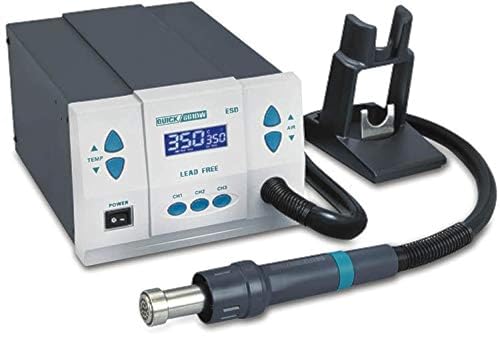
The FX-888D also has no hot-air channel. If you're doing BGA rework, QFN removal, or any reflow work, you need a separate hot-air station — the Quick 861DW pairs well at $119. The FX-888D is iron-only, full stop.
No USB connectivity means no temperature logging, no external monitoring, no integration with automated test setups. This is an irrelevant limitation for home use but matters to production environments.
Finally: the iron cable is reasonably flexible but not the most ergonomic on the market. The JBC T245 handle is noticeably more comfortable over a long rework session. The FX-888D's handle is fine for occasional bench work; it's not a fatigue-free tool for 4-hour sessions.
Who Should Buy the FX-888D (and Who Shouldn't)
Buy the FX-888D if you assemble or rework PCBs regularly, need a station that will be accurate and reliable for 10+ years, and want access to a mature tip ecosystem without paying JBC or Metcal prices. It's the right tool for Arduino/Raspberry Pi hacking, consumer electronics repair, small-batch PCB production, and hobby-level surface-mount work down to about 0402 (0.4mm pitch with the right tip).
Buy it even if it seems 'overkill' for your current use — it's not. A $30 hardware store iron frustrates people out of electronics hobbies. The FX-888D removes equipment as a limiting factor.
Don't buy the FX-888D if you do paid electronics repair professionally, work with fine-pitch ICs regularly (0.3mm pitch and below), or solder more than 2–3 hours a day. At that level, the JBC CD-2BC's thermal recovery and comfort are worth the premium. The FX-888D is the hobbyist ceiling; it's also that ceiling for a decade.
Also don't buy the FX-888D if you specifically need hot-air capability. Budget for the FX-888D plus a Quick 861DW as a pair — that $230 combination handles 95% of bench repair scenarios.
Our Verdict
The FX-888D is the benchmark every other hobbyist station gets compared to. Temperature stability, build quality, and tip availability are unmatched at this price. If you solder PCBs regularly and want a tool that will last a decade, this is it.
| Full Specifications | |
|---|---|
| Station Type | Digital Soldering Station |
| Wattage | 65W |
| Temp Range | 120–480°C |
| Temp Stability | 2±°C |
| Tip System | T18 Series |
| Digital Display | Yes |
| Temp Lock | Yes |
| Sleep Mode | Yes |
| Hot-Air Channel | No |
| Channels | 1 |
| Unit Weight | 2.2lbs |